
DWC Set to Absorb DXB Flights by 2035, Transforming UAE’s Aviation Landscape
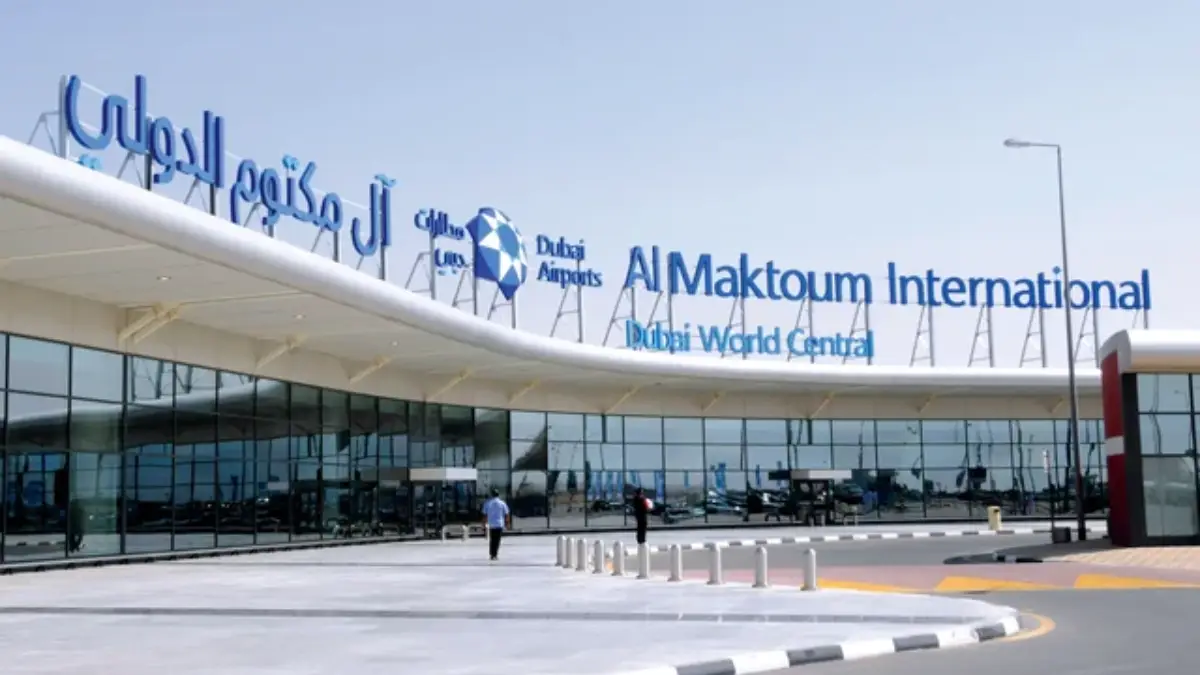
The global aviation industry is on the brink of a significant infrastructure transformation that will reshape travel and logistics in the United Arab Emirates. Al Maktoum International Airport (DWC) is set to take over the entire commercial flight network of Dubai International Airport (DXB) over the next decade, as outlined in a recent report from a digital insights platform.
To clarify for international travelers, it is essential to differentiate between these two major airports. Dubai International Airport (DXB) serves as the city’s historic inner-city airport, while Al Maktoum International Airport (DWC) is the rapidly expanding mega-hub located in Dubai South.
This transition signifies the conclusion of a notable era in aviation for Dubai. The shift is driven by the practical necessity of accommodating the city’s burgeoning success, which has pushed existing infrastructure to its limits. Economic planners have determined that DWC’s takeover of DXB flights is essential for maintaining the UAE’s status as a global crossroads.
DWC Takes Over DXB Flights: The Timeline
The migration of such a vast aviation network requires a meticulous and structured approach. Airport officials have announced a multi-phase timeline for the full transfer of commercial passenger travel, scheduled between 2032 and 2035. This long-term strategy allows for the complete construction of the necessary infrastructure at Dubai South. Additionally, engineers will conduct stress tests on the new facilities under live conditions prior to the permanent transfer of operations.
In the interim, maintaining parallel operations will enable the city to meet growing demand without compromising the passenger experience. While there is considerable interest in the prime urban land currently occupied by DXB, operating two competing international airports in close proximity is deemed impractical. A single consolidated hub will also alleviate inner-city traffic congestion, making DWC’s takeover of DXB flights the most efficient use of national infrastructure.
Global Impact
The implications of this transition extend far beyond the UAE. DXB currently connects the emirate to 291 unique destinations across 110 countries, serving as a critical hub for East-West trade, business, and tourism. Any reduction in capacity at DXB would significantly affect global supply chains, as millions of travelers pass through the airport each month.
According to official data from Dubai Airports, DXB handles nearly 8 million passengers monthly, with peak periods seeing numbers rise to 8.7 million. The annual average hovers around 95.2 million. Ensuring that international airlines can operate without delays during the transition to DWC is crucial.
Moreover, Dubai’s airspace is vital for connecting to major global economies. India ranks as the top market, followed closely by Saudi Arabia, the United Kingdom, and Pakistan. The increasing demand for air travel necessitates additional capacity, which DWC’s infrastructure development will provide. Ultimately, DWC aims to accommodate up to 260 million passengers annually once it fully absorbs DXB flights.
Engineering to Manage Global Traffic Growth
The transition to Al Maktoum International Airport represents a comprehensive rethinking of modern travel services. The AED 128 billion master plan allows for the integration of cutting-edge technologies that are not feasible within the confines of the older airport. The new mega-hub will feature five parallel runways and advanced biometric processing corridors, streamlining passenger flow and expediting baggage handling.
Additionally, the new airport will transform domestic travel with direct connections to the national Etihad Rail network, reducing travel time to Abu Dhabi to just 30 minutes. The project is expected to continue through 2057, when full build-out will be achieved. By leveraging raw data for actionable infrastructure planning, Dubai is securing its logistics future. When DWC fully assumes responsibility for DXB flights, the UAE will be well-prepared for the future of international aviation.
Source: timesofdubai.ae
Read all the latest developments and breaking updates in the Latest News section.
Published on 2026-06-02 14:00:00 • By the Editorial Desk


