.jpg)
Dubai’s residential real estate market has shown remarkable resilience and growth in the first half of 2025. With rising property prices, strong rental yields, and a boost in investor confidence spanning both ready and off-plan segments, it is evident that the emirate is carving out a more strategic direction in real estate development.
According to a market report from Bayut and dubizzle, the real estate landscape in Dubai is evolving into a more mature, data-driven environment. In this new phase, factors such as long-term value, transparency, and trusted insights are becoming pivotal in shaping decisions for buyers and sellers alike.
Ready Sales: Suburban Villa Demand Leads Price Gains
The ready sales segment has seen impressive growth, particularly in villa prices within communities like Dubailand, where prices surged by up to 10.4%. This upward trajectory can largely be attributed to the increasing demand for larger, more affordable homes that cater to the evolving needs of families.
Other neighborhoods such as Dubai South, DAMAC Hills 2, and Dubai Sports City have also emerged as high-performing areas. Here’s a breakdown of price increases across various property categories:
- Affordable apartments: Price hikes of up to 7%
- Affordable villas: Growth of up to 11%
- Mid-tier apartments: Up to 3% gain
- Mid-tier villas: Price appreciation between 6% and 10%
- Luxury villas: Growth between 2% and 8%
- Luxury apartments: Price increases of up to 4%
Mid-market buyers are predominantly focused on areas like Jumeirah Village Circle (JVC), Business Bay, and Arabian Ranches 3, while premium property buyers commonly gravitate towards high-end neighborhoods such as Dubai Marina, Downtown Dubai, and DAMAC Hills.
Off-Plan Market: Expanding Supply and Diversified Interest
The off-plan market in Dubai remains robust, driven by consistent launches and diverse demand across various pricing tiers. This segment is particularly attractive to investors looking for opportunities in the ever-evolving landscape of Dubai’s property market.
Affordable off-plan developments:
- Verdana 2 in Dubai South: Apartments priced around AED 682,000–693,000 ($186,000–189,000)
- Azizi Venice: Average price AED 1.15M ($314k)
- 4B Living in International City: Launch price AED 395k ($108k)
- Greenspoint by Emaar: Villas starting from AED 3.4M ($928k)
Mid-tier off-plan properties include:
- Palatium Residences (JVC): Priced at AED 1.34M ($366k)
- Red Square and Guzel Towers (JVT): Prices ranging from AED 907k–1.06M ($248k–290k)
- Binghatti Starlight (Al Jaddaf): A strong mid-segment appeal
- Bay Villas (Dubai Islands): Commanding interest in the mid-luxury coastal market
Luxury off-plan projects are also seeing significant demand:
- Sobha One and Creek Vistas Heights: Approximately AED 2.3M ($628k)
- DAMAC Bay by Cavalli: Priced at AED 4.74M ($1.29M)
- Thyme at Central Park: Approximately AED 2M ($547k)
- Knightsbridge (MBR City) and DAMAC Lagoons villas: Ranging from AED 2.69M to 6.85M ($735k–$1.87M)
Rental Yields: Strong ROIs in Affordable and Mid-Tier Areas
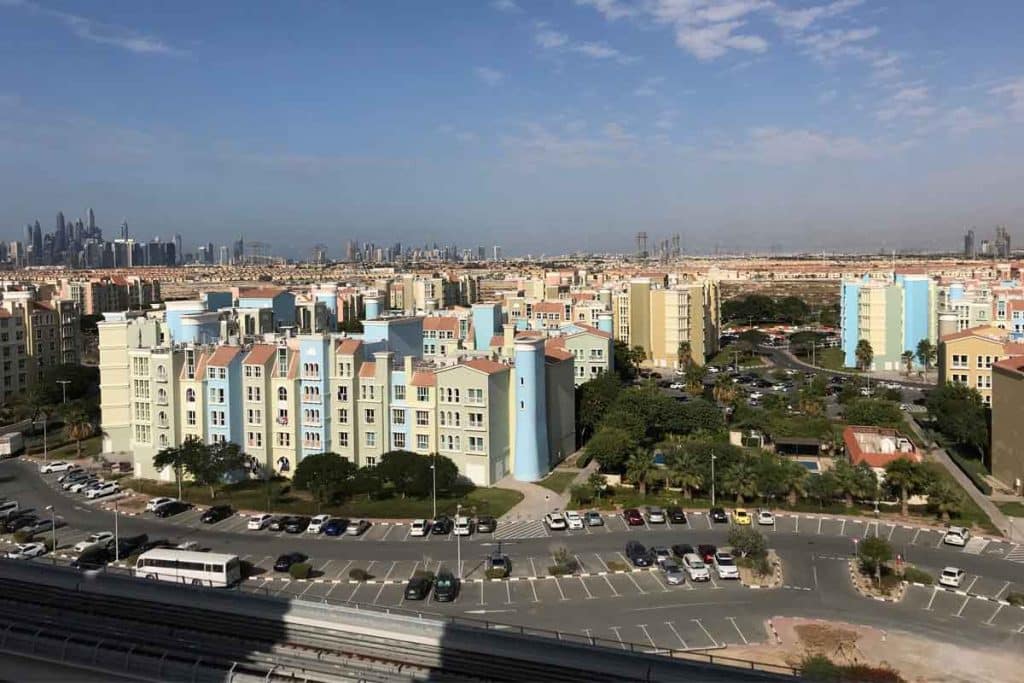
According to Bayut’s ROI analysis, rental yields are particularly favorable in affordable areas such as International City, Dubai Investment Park (DIP), and Discovery Gardens, where returns range from 9% to 11%. Villas in high-demand areas like DAMAC Hills 2, Industrial City, and Serena are also delivering robust returns exceeding 5.85%.
- Mid-tier communities: Offering ROI between 7% and 10% in Town Square, Mudon, and Al Furjan
- Luxury zones: Reporting over 5.9% ROI in Al Sufouh, Creek Harbour, and Jumeirah Golf Estates
Dubai Real Estate Analysis
Haider Ali Khan, CEO of Bayut and dubizzle, articulated a significant shift occurring within Dubai’s property market. “Demand remains strong, but price movements are becoming more measured, a positive indicator of long-term stability,” he noted, underscoring the overall confidence investors have in the real estate market as it adapts to changing dynamics.

