
Tata Empire Faces Turmoil as Chairman N. Chandrasekaran Resigns Amid Tensions with Tata Trusts
N. Chandrasekaran, the chairman of Tata Sons, announced his resignation on Wednesday, citing a lack of board approval for his reappointment. This decision comes amid ongoing tensions with Tata Trusts, the philanthropic arm that holds approximately 66% of Tata Sons, which oversees more than 30 companies within the Tata Group.
Overview of the Tata Group’s Business Landscape
The Tata Group, a significant player in various sectors, has faced challenges and transformations across its diverse business portfolio. Below is an overview of key sectors impacted by recent developments.
Aviation Sector
The aviation division of Tata Group is primarily represented by Air India and Air India Express, which operate nearly 300 aircraft. In November 2024, Air India merged with Vistara, a collaboration between Tata Sons and Singapore Airlines, resulting in a larger full-service carrier with an enhanced network and fleet. Despite this growth, the airline has reported losses each year since Tata’s acquisition in 2022. Currently, it is undergoing a multi-year turnaround strategy to address supply chain issues, increasing financial losses, and the modernization of outdated IT systems.
Automotive Industry
Tata Motors has evolved from a domestic truck manufacturer to a global automotive entity, encompassing commercial vehicles, passenger cars, and electric vehicles (EVs). This transformation was significantly bolstered by the 2008 acquisition of British luxury brand Jaguar Land Rover for $2.3 billion. In October 2025, Tata Motors completed a demerger, creating two publicly listed entities: Tata Motors Passenger Vehicles Ltd, valued at approximately $13.43 billion, and Tata Motors Ltd, focused on commercial vehicles with a market capitalization of around $17.39 billion. The passenger vehicle segment reported sales of 641,587 units, including EVs, for the fiscal year 2026.
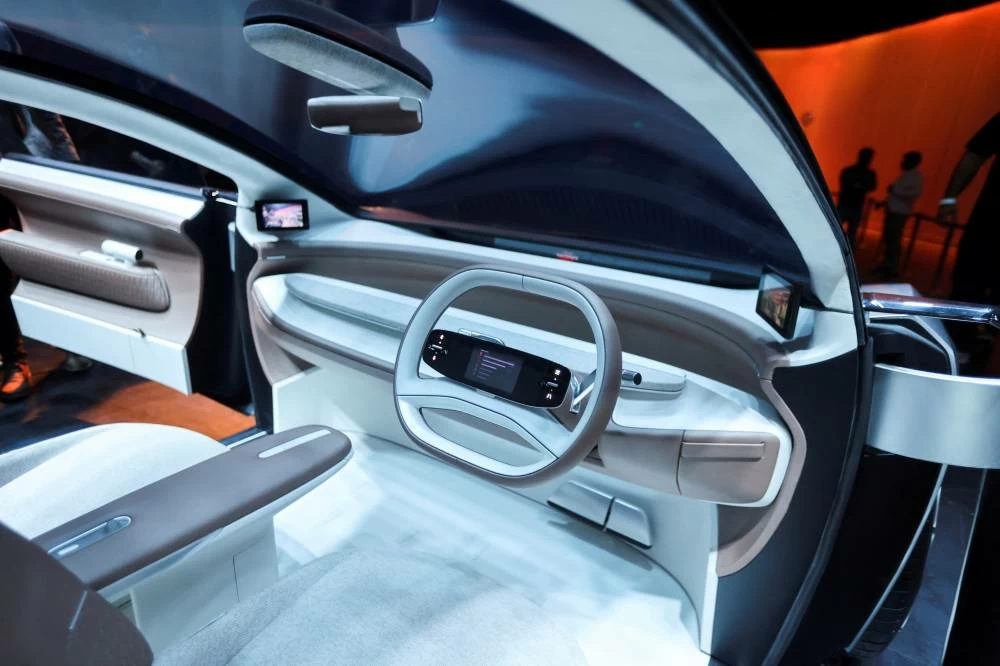
Image: A general view of the interiors of the Tata Avinya concept car unveiled during a global launch event in Mumbai, India, April 29, 2022. REUTERS
Jaguar Land Rover has faced challenges, including an annual loss attributed to a cyberattack that disrupted production, alongside declining demand in China and increased tariffs in the United States. In 2025, Tata Motors announced its acquisition of Europe’s Iveco Group in an all-cash transaction valued at $4.36 billion, aimed at merging their commercial vehicle operations and expanding into European and American markets.
Information Technology Sector
Founded in 1968, Tata Consultancy Services (TCS) has been a cornerstone of Tata Sons’ financial success, serving clients across banking, manufacturing, consumer goods, and media globally. Historically, TCS has been the largest contributor to Tata Sons’ dividend income. However, the company’s shares have declined by over 25% this year, resulting in a market capitalization of approximately $92.85 billion, as clients reduce discretionary technology spending amid economic uncertainties.
Steel Industry
Established in 1907, Tata Steel is one of the oldest steel manufacturers globally, with operations spanning mining to finished products in India and Europe. The company has a market capitalization of around $24.66 billion and solidified its international presence through the $12 billion acquisition of Corus in 2007. For the fiscal year ending March 31, 2026, Tata Steel reported a net profit of 159.69 billion Indian rupees ($1.67 billion), a significant increase from 84.23 billion rupees the previous year.
Power and Energy Sector
Tata Power, one of India’s largest integrated power utilities, has a market capitalization of about $12.74 billion. The company operates across various segments, including power generation, transmission, distribution, renewable energy, solar manufacturing, and electric vehicle charging, boasting over 16 gigawatts of installed capacity that serves more than 13 million customers. For fiscal 2026, Tata Power reported a profit after tax of 51.18 billion rupees, up from 47.75 billion rupees the previous year.
Retail and Consumer Market
The Tata Group maintains a robust presence in India’s consumer market through various companies, including Titan (jewelry and watches), Trent (fashion retail), Tata Consumer Products (packaged foods and beverages), and Voltas (air conditioning and consumer durables). Notable brands include Tanishq jewelry, Westside and Zudio fashion stores, Croma electronics outlets, and BigBasket’s online grocery service. Additionally, the group owns the British tea brand Tetley and is a joint-venture partner with Starbucks in India, operating over 500 outlets across 80 cities as of 2026.
Semiconductor Initiatives
Tata Electronics, a non-public entity, is making significant strides in India’s semiconductor industry by constructing a semiconductor fabrication facility in Gujarat and a chip assembly and testing plant in Assam. This initiative is supported by Taiwan’s PSMC and Dutch equipment supplier ASML, with the facilities expected to cater to clients in automotive, artificial intelligence, and consumer electronics sectors.
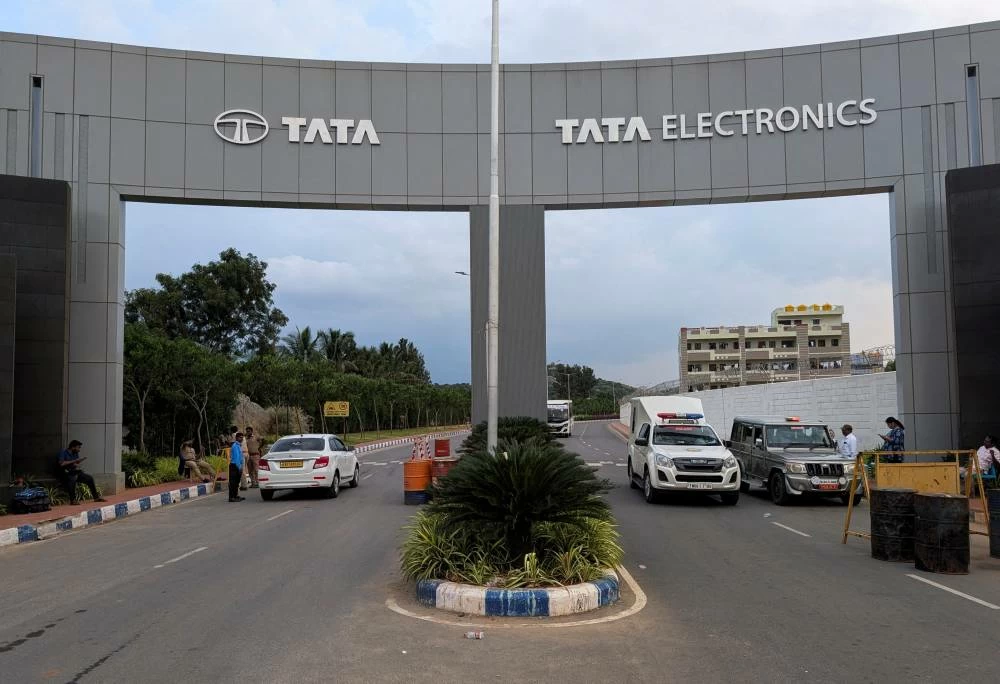
Image: Vehicles pass through the security check at the entrance of Tata Electronics Plant in southern India, which manufactures components for Apple’s iPhone in Hosur, Tamil Nadu, India, September 28, 2024. REUTERS
Financial Services
Tata Capital provides a range of financial services, including lending, wealth management, and investment banking, through a nationwide network. Tata AIA and Tata AIG enhance the group’s presence in life and general insurance markets.
Telecommunications and Digital Services
Tata Communications connects businesses in over 190 countries and has expanded its offerings to include cloud, cybersecurity, and AI infrastructure. Tata Play is recognized as one of India’s leading pay-TV and streaming platforms.
Source: www.emirates247.com
Read all the latest developments and breaking updates in the Latest News section.
Published on 2026-08-12 15:00:00 • By the Editorial Desk