
US Naval Blockade on Iran Sparks Economic Turmoil Across Gulf States
Following the collapse of the Islamabad Talks Phase I, the United States Navy implemented a naval blockade on Iran on April 13, targeting all vessels transiting Iranian ports. This blockade has significant implications for the Strait of Hormuz, a critical passage for the United Arab Emirates (UAE) and other Gulf nations reliant on this route for their exports. The blockade’s repercussions extend beyond Iran, triggering an economic crisis that is adversely affecting Gulf states as well.
The Naval Blockade vs. Iran
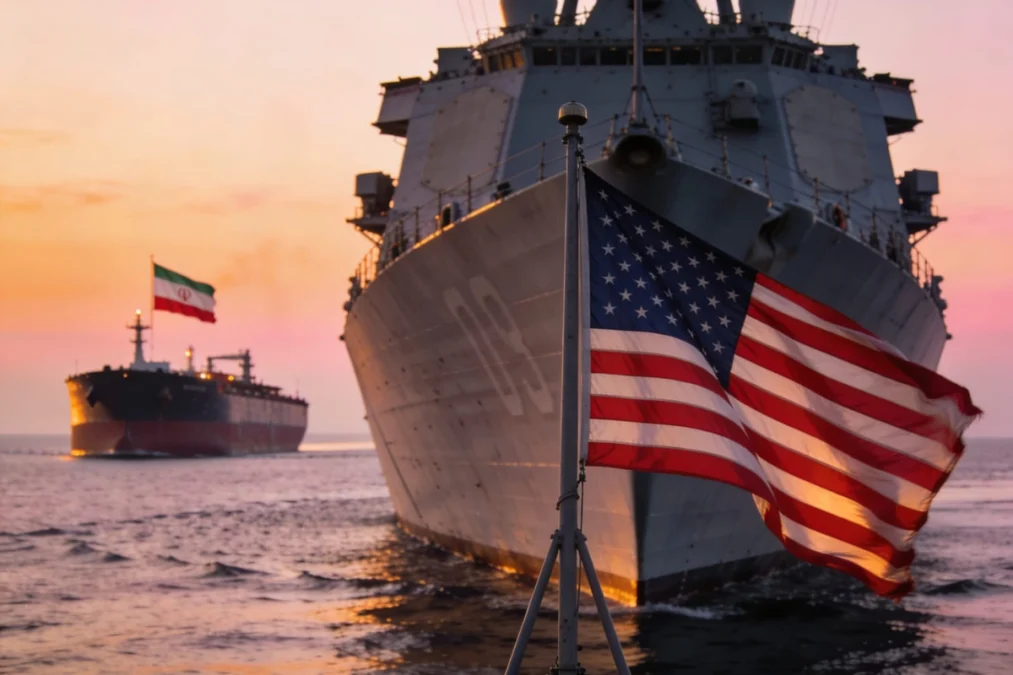
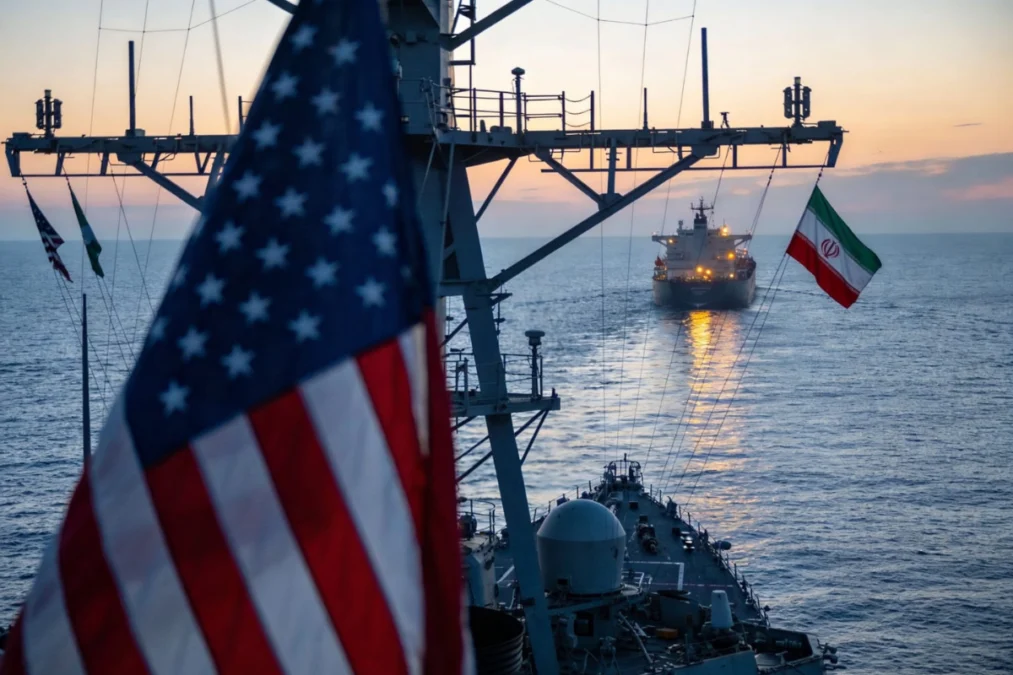
In the first 24 hours of the blockade, six commercial ships were redirected back to Iranian ports, and over 10,000 US personnel along with numerous warships were deployed. Reports indicate that the blockade could prevent approximately 2 million barrels of Iranian oil from reaching global markets. This blockade not only disrupts a waterway responsible for 25 percent of the world’s seaborne oil and 20 percent of liquefied natural gas but also impacts 90 percent of Iran’s economy.
Escalation at Sea: Seizures, Retaliation Threats
On April 19, the US Navy seized an Iranian-flagged cargo ship for violating the blockade in the Gulf of Oman. Iran responded aggressively, with a spokesperson from Khatam Al-Anbiya warning that the armed forces of the Islamic Republic would retaliate against what they termed “armed piracy” by the US military.
By April 20, at least 26 Iranian vessels reportedly crossed the blockade line. Data from Vortexa confirmed that two Very Large Crude Carriers (VLCCs), Hero II and Hedy, successfully navigated past the blockade, collectively capable of transporting four million barrels of oil. However, this limited success underscores the overall impact of the blockade, which has seen Iranian tanker traffic plummet from 140 vessels per day prior to the US-Iran conflict to just three.
On April 21, US forces detained another oil tanker linked to Iran, marking a significant expansion of US operational zones. This vessel was captured in the Bay of Bengal, indicating a broader scope of US maritime enforcement.
Iran Responds: Hormuz Closure and Vessel Seizures
Iran announced a reversal of its earlier decision to reopen the Strait of Hormuz, stating it would remain closed until the US blockade is lifted. On April 22, the Islamic Revolutionary Guard Corps (IRGC) fired upon and captured three commercial vessels—MSC Francesca, Euphoria, and Epaminondas—within the strait.
As storage tanks in Kharg Island approach capacity, engineers warn of potential permanent damage to oil wells if operations remain halted beyond April 26. The US estimates that Iran is losing approximately $500 million daily due to the blockade. White House Press Secretary Karoline Leavitt stated that while military strikes may be paused, “Operation Economic Fury continues,” emphasizing the blockade’s role in crippling Iran’s economy.
Iran’s Agriculture Minister, Gholamreza Nouri, claimed that food security remains intact, with 85 percent of agricultural products produced domestically. However, the country continues to depend on imports from neighboring borders amid the ongoing blockade.
The Gulf States: Collateral Damage
The economic fallout from the blockade has rapidly affected Gulf capitals. The Strait of Hormuz is vital for one-third of global seaborne oil and all of Qatar’s liquefied natural gas exports. By March 10, oil production from Kuwait, Iraq, Saudi Arabia, and the UAE had dropped significantly, with a decline of 6.5 million barrels per day, further plummeting to around 10 million barrels per day by March 12. Brent crude prices surged from $61 per barrel in January to $118 by the end of the first quarter.
According to the Gulf Cooperation Council, nations relying on Hormuz for 80 percent of their food imports experienced a 70 percent disruption in supply by mid-March, forcing retailers to airlift supplies.
The UAE has faced immediate repercussions, including attacks on its infrastructure by Iranian drones and missiles. A major airport hub in Dubai was struck, and the Burj Al-Arab sustained damage from intercepted debris. Luxury retail sales at the Mall of Emirates dropped between 30 and 50 percent, while tourism and public spaces were severely impacted.
Abu Dhabi’s Murban crude exports, shipped via Fujairah, saw premiums collapse as buyers factored in war risks. Tanker insurance rates for UAE ports surged by 400 percent within 72 hours, and on April 15, the entire Gulf region was classified as high-risk by the Joint War Committee.
Reports indicated a 30 percent cancellation rate of vessels at Jebel Ali, the largest container hub in the region, as shipping companies rerouted around the Cape of Good Hope. The re-export trade for Dubai’s gold and diamonds has stalled, heavily reliant on Iranian and Indian cargo, with banks cutting letters of credit amid rising tensions.
Analysts estimate that the UAE faces daily trade losses between $200 million and $300 million. A trader in Dubai remarked that while they are not officially at war, they are certainly paying for it.
Holding the Line
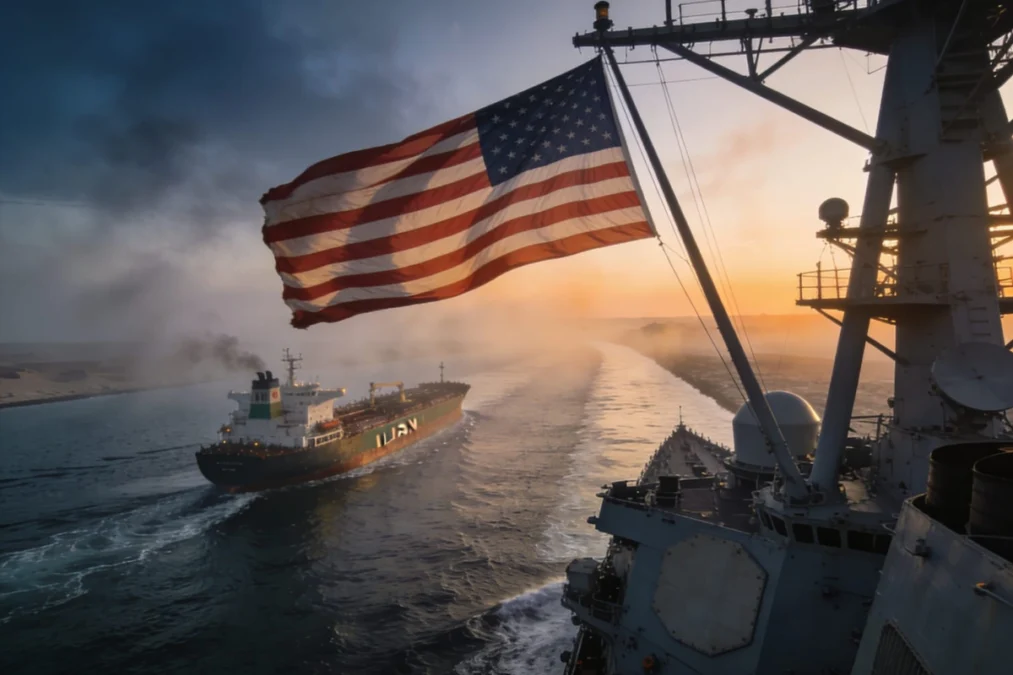
In response to the escalating situation, Sultan Al Jaber of the UAE has called for the unconditional reopening of the Strait of Hormuz. He emphasized that the burden of “every missing barrel” falls on ordinary people and stressed that the global economy cannot afford further uncertainty. He asserted that the strait is a global asset that should return to its pre-war status.
Saudi Arabia is reportedly considering its 1,200-kilometer East-West pipeline as a long-term alternative to bypass Hormuz entirely, delivering oil to the Red Sea port of Yanbu.
The blockade’s primary objective is to diminish Iran’s revenue, a goal that appears to be effective. However, the blockade also impacts global trade, as the Strait of Hormuz is crucial for many nations. The ramifications of this situation are being felt by America’s closest regional partners as the ceasefire clock continues to tick.
Source: timesofdubai.ae
Read all the latest developments and breaking updates in the Latest News section.
Published on 2026-04-23 22:02:00 • By the Editorial Desk


