
Albanian Discovery of 200 Tons of Natural Hydrogen Annually Accelerates Global Decarbonization Efforts
The quest for sustainable energy has taken a significant turn with the recent discovery of a substantial natural hydrogen source in Albania. A team of international researchers from France and Albania uncovered this resource approximately 950 meters underground at the Bulqizë chromite mine. This finding has the potential to reshape the role of white hydrogen in the global energy transition.
Possible Energy Relief
The urgency of this discovery is highlighted by the alarming state of global atmospheric conditions. The International Energy Agency (IEA) reported that energy-related carbon dioxide emissions reached a record high of 37.4 billion tonnes in 2023, with projections indicating a further increase of approximately 0.8 percent in 2024. Although the growth rate has slowed compared to the previous decade, cumulative emissions continue to rise, exacerbating the greenhouse effect. This trend has resulted in atmospheric CO₂ concentrations hitting 422.5 ppm in 2024, marking a 3 ppm increase from 2023 and a 50% rise from pre-industrial levels.
The United Nations and the Intergovernmental Panel on Climate Change (IPCC) have outlined the systemic risks associated with these emissions. Ocean acidification, driven by CO₂ absorption, threatens marine life, particularly organisms like coral and shellfish. Additionally, temperature shifts disrupt ecosystems, leading to biodiversity loss and jeopardizing food security. These environmental changes also contribute to agricultural instability, as climate change alters traditional farming cycles and freshwater availability, increasing the risk of socio-economic displacement.
In this context, the discovery of a high-flow, naturally occurring energy source could serve as a pivotal element in decarbonization strategies.
Hitting the Hydrogen Jackpot?
The discovery occurred within the Bulqizë mine, located in a Jurassic ophiolite, a section of the Earth’s oceanic crust and underlying upper mantle that has been uplifted and exposed on land. The research team, led by Laurent Truche of the Université Grenoble Alpes, found that a mine shaft had breached a fault zone, releasing pockets of trapped gas.
According to findings published in Science, a pool of water nearly a kilometer underground is outgassing approximately 200 tons of natural hydrogen annually. This flow rate is estimated to be 1,000 times greater than any other documented ophiolite site. Researchers estimate the total reservoir capacity to be between 5,000 tons and 50,000 tons.
Unlike green hydrogen, which is produced via electrolysis using renewable electricity, or grey hydrogen, derived from natural gas with CO₂ byproducts, white hydrogen is generated through natural geological processes. The primary mechanism is serpentinization, where water reacts with iron-rich minerals in the Earth’s mantle to release hydrogen. This process occurs naturally, requiring minimal human energy investment for extraction.
Why White Hydrogen Could Win
White hydrogen presents several advantages over manufactured alternatives. A key benefit is zero-emission combustion; utilizing hydrogen in fuel cells produces only water vapor and heat as byproducts. Additionally, the resource has low energy intensity since the gas is already present in a concentrated form, eliminating the significant electrical input necessary for electrolysis.
Economic estimates suggest that white hydrogen could be produced at a cost of approximately $0.50 to $1 per kilogram, significantly lower than the $4 to $6 per kilogram currently required for green hydrogen. Geological processes such as serpentinization and radiolysis are ongoing, providing continuous replenishment that may allow some reservoirs to function as semi-renewable sources. The versatility of hydrogen also makes it a crucial solution for hard-to-abate sectors like steel and cement production, as well as long-haul shipping, where battery electrification remains impractical.
The discovery in Albania has sparked international interest in ophiolite belts and cratonic basins. The United States Geological Survey (USGS) suggests that there may be enough accessible natural hydrogen worldwide to meet global demand for hundreds of years. This has led to increased exploration investment, particularly in North America and Australia.
In the United States, three regions have been identified as high-potential white hydrogen sites. The Midcontinent Rift, stretching through Minnesota, Iowa, and Nebraska, is a primary area of interest. The Piedmont Region along the East Coast has also been flagged for its significant potential, while the Cascadia Range in the Pacific Northwest is considered a key location for future natural hydrogen extraction.
Big Potential, Hard Reality
While the discovery in Albania serves as proof of concept, scaling the technology for commercial use presents technical challenges. Extracting gas from deep, faulted reservoirs requires specialized drilling techniques similar to those used in the natural gas industry, but adapted for hydrogen’s unique properties, which include being the smallest molecule and prone to leakage.
The 200 tons per year measured at Bulqizë, although record-breaking for an ophiolite, is small compared to the global hydrogen demand of approximately 95 million tonnes annually. However, the geological signature indicates that large-scale accumulations can exist and be trapped within the Earth’s crust.
Michael Webber, an energy researcher at the University of Texas, emphasized that recovering even a small fraction of the Earth’s natural hydrogen could lead to a significant shift in the global energy balance.
A Functional Future?
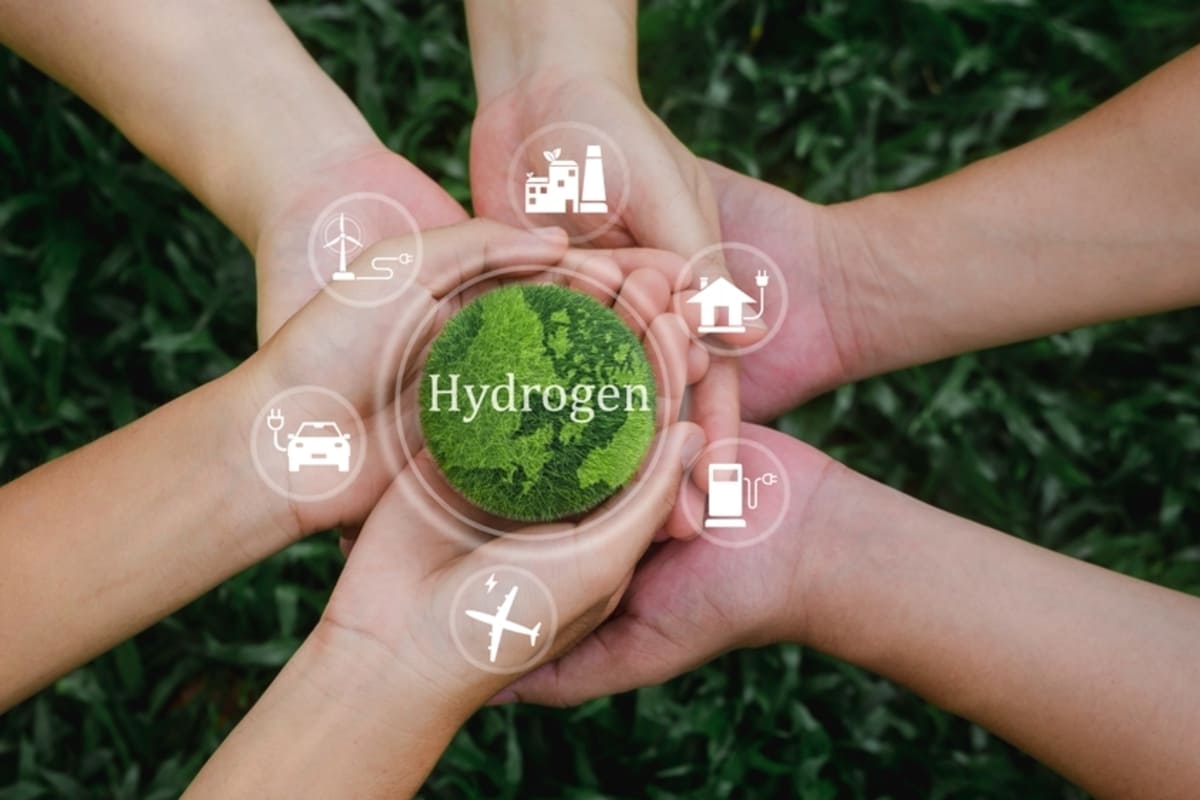
The projected growth of the hydrogen economy is significant. The Hydrogen Council predicts that by 2050, hydrogen could account for 18 percent of total global energy demand.
The large-scale extraction of white hydrogen could lead to transformative shifts across various economic and structural sectors. Production costs could decrease by 70 to 80 percent compared to current renewable hydrogen, enhancing affordability. Existing natural gas pipelines may be retrofitted to transport hydrogen blends, reducing the capital expenditure required for a new energy grid. The natural hydrogen market is expected to experience a compound annual growth rate of over 15 percent as exploration licenses are granted in countries like France, Mali, and Australia.
In France, the first exclusive license for white hydrogen exploration was granted in late 2023 in the Pyrénées region. In Mali, a small village has been powered by 98 percent pure natural hydrogen for over a decade, serving as a localized case study for the reliability of these subterranean reservoirs.
The discovery at the Bulqizë mine raises questions about whether these white gold reserves can be commercially extracted to provide a consistent source of clean power. The ongoing exploration efforts aim to bridge the gap between theoretical potential and a functional energy future.
Follow all the latest developments and breaking updates visit our Latest News section.
Published on 2026-03-30 16:41:00 • By Editorial Desk